
There is something uniquely Scouting about standing on top of a mountain, pulling a radio from your pack, stringing up an antenna, and making contact with someone hundreds or even thousands of miles away.

It combines adventure, self-reliance, technology, communication, problem-solving, and service. Add Leave No Trace principles, navigation, backpacking, and youth leadership, and amateur radio stops looking like a separate STEM activity and starts looking remarkably like Scouting.

That is why I believe Scouting America has an enormous opportunity with Radio Scouting, particularly through the annual Jamboree-on-the-Air and Jamboree-on-the-Internet, better known as JOTA-JOTI.
Our Scouts and Scouters genuinely enjoy JOTA. In an age where so much technology consists of staring at another screen, amateur radio gives young people an opportunity to physically interact with technology. They build antennas, connect radios, troubleshoot equipment, learn about propagation, talk with people around the world, and discover that the device in their hand is only one small piece of a much larger communications system.
In our Scouting community, that interest has translated into results. Six Scouters and two Scouts have earned amateur radio licenses, with additional Scouts studying for their Technician licenses.
But perhaps the most important lesson we have learned is this:
Radio Scouting does not need to stay at a table inside a building.
Take the Radio Outside
Some of our most successful Radio Scouting activities happen when we combine amateur radio with the outdoor program Scouts already love.
We backpack. We practice Leave No Trace. We climb mountains. We navigate trails. And we bring amateur radio along.

One particularly natural combination has been Summits on the Air (SOTA). Instead of treating amateur radio as the destination, radio becomes part of the adventure. Scouts have to reach the summit, select an operating location, establish a station, deploy an antenna, make contacts, manage batteries and equipment, account for weather, and then leave the area as though they had never been there.
Those activities reinforce exactly the kinds of skills Scouting is supposed to teach.
And our Scouts responded.
Participation increased dramatically when we began combining outdoor adventure with amateur radio.
That should tell us something.
The future of Radio Scouting may not be convincing Scouts to come sit in front of a radio. It may be putting a radio in a Scout’s backpack and asking “Where can we take this?”
Then We Went to Philmont
Our 2026 Philmont trek reinforced that lesson, although not quite in the way I expected.
Before our trek, we encountered guidance that appeared to prohibit radios. During an online training session, the guidance was even interpreted for us as meaning that amateur radios could not accompany a crew. That was disappointing.
For our Scouts, amateur radio is not a distraction from outdoor adventure. It is part of it. We already knew how to carry radio equipment responsibly into the backcountry while respecting Leave No Trace principles and the purpose of the wilderness experience.
So when we arrived at Philmont, we asked our ranger directly. The answer was refreshingly different.
Our ranger explained that amateur radio was a growing, yet relatively unknown, activity at Philmont and that we could absolutely bring our radios on the trail. Later during the trek, another Philmont staff member noticed our radio, asked whether we were amateur radio operators, and enthusiastically told us that he was a ham too. We then struck up a conversation in the middle of the back country. It was great!
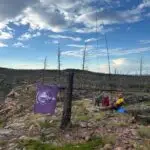
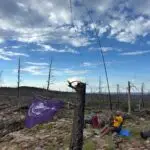
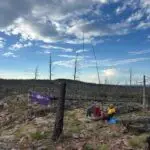
Those interactions were encouraging, but they also illustrated a larger problem. The written guidance, pre-event interpretation, and on-the-ground reality did not appear to be telling the same story.
For a movement that actively promotes Radio Scouting and JOTA-JOTI, that inconsistency matters. Scouts and leaders should not have to wonder whether amateur radio is encouraged at one Scouting activity but discouraged at another.
We can do better.
JOTA-JOTI Should Be the Beginning, Not the End
JOTA-JOTI provides Scouting America with a tremendous gateway into amateur radio.
But we should think bigger than one weekend each year.
JOTA can introduce a Scout to radio in October. That experience can lead to earning the Radio merit badge, obtaining a Technician license, participating in a local amateur radio club, learning emergency communications, experimenting with digital modes, tracking satellites, building antennas, launching high-altitude balloons, or carrying a lightweight station into the backcountry.
It can also connect Scouts and Scouters with the larger Radio Scouting community. K2BSA brings together like-minded Scouts, Scouters, and amateur radio operators from across the country who share a passion for combining Scouting and amateur radio. Through that community, an interest sparked during JOTA can grow into year-round participation, mentorship, experimentation, and service.
JOTA doesn’t have to be a once-a-year radio event. It can be the first step into a much larger Scouting adventure.
That progression connects directly with STEM education while preserving something equally important: adventure.
A Scout who learns radio theory in a classroom is learning STEM.
A Scout who carries that radio five miles up a mountain, builds an antenna, determines why the station isn’t working, solves the problem, makes a contact several states away, packs everything back into a backpack, and hikes out without leaving a trace is practicing STEM, leadership, resilience, outdoor ethics, and problem-solving simultaneously.
That is Scouting at its best.
We Also Need the Amateur Radio Community
Scouting America cannot grow JOTA-JOTI alone.
One of the challenges we have encountered is that many amateur radio operators, even active operators and clubs, know surprisingly little about JOTA.
That represents an enormous missed opportunity.
Across the country, amateur radio clubs already possess exactly what many Scout units lack: radios, antennas, repeaters, experienced operators, technical expertise, and people who genuinely enjoy teaching others about the hobby.
Meanwhile, Scouting has something amateur radio desperately needs: young people who are curious and willing to try something new.

Those two communities should be natural partners.
Scouting America should aggressively encourage councils and units to establish relationships with local amateur radio clubs, emergency communications organizations, and individual operators. Likewise, the broader amateur radio community should see JOTA-JOTI as more than another operating event. It is an opportunity to introduce the next generation to amateur radio.
A Scout’s first JOTA contact could eventually become a lifelong amateur radio operator, engineer, emergency communicator, or public-safety professional.
But somebody has to make the introduction.
Scouting America Has an Opportunity
Radio Scouting occupies an unusual intersection within the Scouting program.
It is STEM without being confined to a classroom. It is communications without requiring cellular infrastructure. It can support emergency preparedness and public service. It connects Scouts across communities, states, countries, and cultures. And most importantly, it can go outside.

We should stop thinking about outdoor adventure and technology as competing interests.
A backpack can carry a tent, water filter, map, compass, and a radio. A Scout can practice Leave No Trace while activating a summit. A crew can disconnect from social media while still communicating through amateur radio. A wilderness experience does not become less authentic simply because a Scout is learning how radio waves travel beyond the horizon.
Quite the opposite.
Done correctly, amateur radio gives Scouts another reason to explore that horizon.
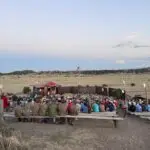
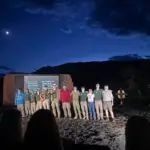
JOTA-JOTI gives Scouting America an outstanding foundation. Now we should build on it by strengthening partnerships with the amateur radio community, expanding Radio Scouting beyond a single weekend, and ensuring that our own programs consistently welcome responsible amateur radio activities.
Our experience has shown that Scouts will respond.
Give them a radio.
Give them a trail.
Give them a mountain.
Then see how far they can go.